
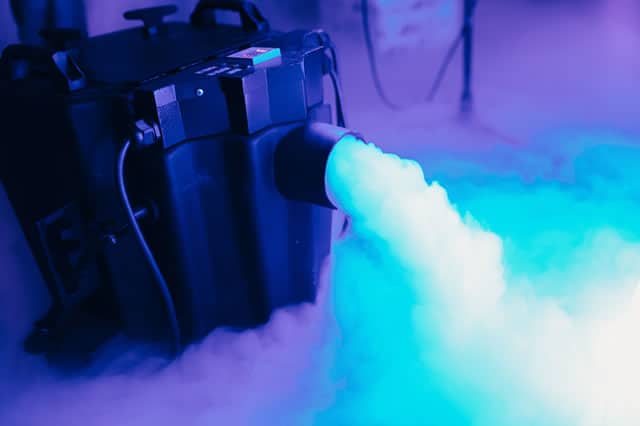
In equipment hire, “smoke machine” and “fog machine” usually describe the same fluid-based theatrical effect, not smoke from burning material. Haze is thinner, while low fog describes a floor-level effect that can be produced with or without dry ice.
Smoke vs Haze vs Low Fog vs Dry Ice: The Short Answer
Smoke / fog machines heat fog fluid to produce dense, visible clouds in bursts, ideal for dramatic, short-lived effects like reveals, Halloween moments and music drops.
Haze machines create a fine, nearly invisible atmosphere across the room, specifically to reveal light beams and laser fans for DJs, clubs and wedding dance floors.
Low fog machines keep fog low lying on the floor for first dances and stage reveals. Some use chilled fog or ultrasonic mist without dry ice; dry ice machines are another way to create low fog.
Dry ice machines are one particular type of low fog machine that uses solid CO₂ and hot water to create a cold, floor-hugging cloud.
Practical pairings: if you want the whole room smoky for Halloween, book a fog machine. If you want crisp light beams all night, book a haze machine. If you want a cloud at your feet for one song, book low fog or dry ice.
Quick Comparison: Smoke, Haze, Low Fog and Dry Ice
Conventional fog / smoke
Appearance: Thick, swirling clouds that fill a room in bursts; great for dramatic reveals and atmosphere
Consumables: Water-based fog fluid (glycol or glycerine based)
Practical points: Rises and spreads; duration depends on fluid type; can trigger fire alarms easily; needs warm-up time
Haze
Appearance: Fine, even mist; makes light beams and lasers visible without obvious smoke particles
Consumables: Water-based haze fluid or oil-based haze fluid (not interchangeable)
Practical points: Controlled, even output; persistence depends on the room and ventilation; can trigger detectors; sensitive to draughts
Low fog (no dry ice)
Appearance: Low lying carpet of mist hugging the floor
Consumables: Water-based low-fog fluid, plus distilled water for ultrasonic models
Practical points: Best for timed moments; draughts and air-con can break up the effect; no dry ice to source or handle; follow the machine’s operating requirements
Dry ice
Appearance: Dense, cold cloud that hugs the ground
Consumables: Dry ice blocks or pellets plus heated water
Practical points: Short duration per load; CO₂ accumulation risk; requires ventilation, insulated handling and venue approval
Conventional Smoke / Fog Machines: Big Visible Clouds
A smoke machine produces thick clouds of white fog that spread across the room. Smoke machines use a heating element, essentially a metal heat exchanger block, to vaporise compatible fog fluid. The hot vapour exits the nozzle, meets cooler air and condenses into visible fog.
Smoke machines produce thick, opaque clouds of fog that are ideal for sudden dramatic reveals, Halloween parties and big music drops. However, the fog naturally rises, so it will not stay low lying on the floor like a low fog or dry ice effect. Different fog fluids change the duration: fast-dissipating formulas clear more quickly, while longer-hang formulas persist.
For many conventional smoke and fog machines, allow roughly 5-10 minutes to warm up from cold. The exact time varies by model, and some machines are ready sooner. Heavy use can cool the heater, so a machine may pause to reheat before it can produce another burst. Check the selected model’s instructions and build warm-up and recovery time into your plans. Dry ice machines heat a tank of water and can take considerably longer.
Remote Controls, DMX and Wireless Operation
Some machines have their own wired or wireless remote control, but not every model does. Many professional effects machines use DMX, the control language that lets a lighting desk send instructions to compatible lights and effects equipment. It allows the operator to control supported functions, such as fog output and timing, from one position.
We can supply and operate DMX lighting desks. If it is impractical for an operator to stand near the machine, we can arrange compatible wireless control equipment so it can be operated remotely. The machine still needs a suitable power supply and the right remote or DMX connection. Ask us to confirm the control setup for the model you choose.
Haze Machines: Best for Light Beams and Lasers
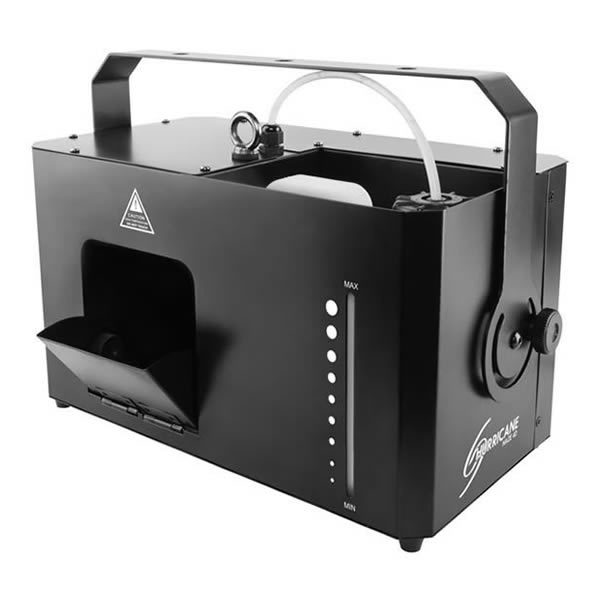
An example of a haze machine.
Haze is our usual starting point for house parties where the aim is to make the lighting look good rather than fill the room with thick clouds. It makes moving-light beams and laser effects easier to see in mid-air. The right machine depends on the room, ventilation and effect you want.
Smaller parties may only need a compact hazer, while larger events and professional productions can need more output and finer control. Tell us about the space and lighting so we can recommend the right level of machine. Browse our smoke, haze and dry ice hire range to see the current options.
Haze is usually built up gradually at a controlled output. How long it remains visible depends on the machine, fluid, ventilation and airflow. Agree any setup and testing with the venue.
Use only the haze fluid specified for the particular model. Water-based and oil-based hazers exist, and their fluids are not interchangeable. A less visible effect can still trigger detectors.
That said, haze can still interact with optical fire alarms, so coordinate timing and detector management with the venue’s responsible person, never adjust alarms yourself.
Low Fog Without Dry Ice: Ice-Cube and Ultrasonic Machines
Ice-cube low fog machines: why we stopped stocking them
Some low fog machines pass ordinary fog through a chamber filled with ice cubes. Cooling the fog helps it stay near the floor until it warms and starts to rise. The ice is ordinary frozen water, not dry ice.
We previously stocked this type of machine but no longer hire it out. As the ice melts, the water needs to be managed and drained. Spills can leave a slippery floor, and we also found that customers sometimes forgot to empty the machine before transport, allowing water to spill in the vehicle. Those practical problems are why we moved away from ice-cube machines.
Ultrasonic low fog machines: our practical alternative
Ultrasonic low fog machines have become a practical alternative for weddings and private events because there is no dry ice to source, store or handle and no ice-cube chamber to refill. They still need the correct water and fluid, suitable positioning and venue approval.
The effect is not exactly the same as real dry ice. In our experience, ultrasonic low fog offers a useful balance of appearance, ease of use and operating cost, with fewer dry-ice handling precautions. It is generally cheaper to run than buying dry ice for repeated effects. It is not risk-free, and room conditions still affect the result.
Ultrasonic systems use water and compatible low-fog fluid, with an ultrasonic plate creating a fine water mist as part of the floor-level effect. Follow the selected model’s water requirements, which may specify distilled water. Water and fluid still need to be handled carefully, and the machine must be prepared for transport according to its instructions.
Practical points: low fog will move with draughts and air-con, steps and stages may disappear visually, and the useful duration depends on the machine, consumables and room conditions. Plan the timing carefully and walk the room in advance to spot vents or open doors that may blow the fog away.
Real Dry Ice Machines: Classic First Dance Cloud
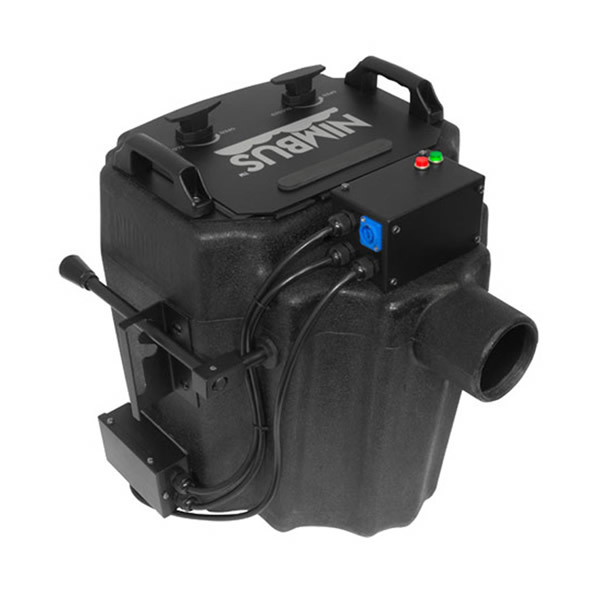
An example of a dry ice machine.
The “dancing on a cloud” moment most couples imagine is a dense, low lying carpet of white mist at their feet. A true dry ice machine is one way to achieve it.
Dry ice is solid carbon dioxide at roughly −78.5 °C. Dry ice machines use heated water plus dry ice to produce a thick, cold cloud that hugs the floor. The visible cloud is condensed water droplets carried in very cold air and CO₂, not CO₂ vapour itself. Invisible CO₂ can accumulate in poorly ventilated or low-lying spaces even after the visible fog has disappeared.
For event planning, we normally allow roughly 3-5 minutes of effect from a basket of dry ice before a refill is needed. Actual duration depends on the machine, load and output setting, so confirm the selected setup rather than assuming it will run throughout a whole event. The water also cools during use and may need time to reheat. Dry ice machines can take much longer to warm up initially than a conventional fogger.
Dry ice needs more careful handling: use proper insulated protection, never store it in an airtight container and follow the machine’s instructions for handling dry ice and hot water. Keep the machine and consumables away from guests, particularly children or anyone who has been drinking. Operation and refilling should be handled by a sober, briefed operator. Suitable ventilation remains essential, especially in basements and low-lying spaces. Discuss the arrangements with the venue and your effects provider before booking.
Jet Fog Machines: Coloured Bursts and Flame-Style Effects
If you want a short, punchy burst for a music drop or party entrance, a jet fog machine is another option. Many have built-in LEDs that colour the fog as it shoots out. Green lighting can give the burst a spooky Halloween look, while red, amber and orange tones can create a fiery, flame-style effect, like a volcano erupting. The appearance and available colours depend on the machine and settings. It is illuminated fog, with no real flames. These machines can also create a CO₂-jet-style look using compatible fog fluid rather than compressed CO₂ cylinders.
Compact jet fog machines can suit home parties, while larger events may need a more powerful setup. These are burst effects, rather than a substitute for the even atmosphere of a hazer or the floor-level cloud of a low fog machine. Check the required clearance and positioning with us, keep people out of the output path and allow for any reheating between bursts. Control options vary by machine.
Fog Fluid, Haze Fluid and Low Fog Consumables
The right fluid is essential for both safety and getting the effect you paid for.
Fog fluid is a water-based liquid, often glycol fog or glycerine based, designed for theatrical fog machines. It comes in fast, medium and long-hang formulations. Follow the fluid manufacturer’s instructions and safety data sheet; water-based does not mean risk-free.
Haze fluid is a separate category: water-based haze fluid for heated hazers, and specialist oil-based fluids for oil-cracker hazers. Residue and surface conditions depend on the system, fluid and use. These are not interchangeable with standard fog fluid.
Low fog fluid has properties tuned for quick-clearing, dense, low lying fog. Ultrasonic models also require suitable water (often distilled) plus compatible fluid as specified by each model.
Using the wrong fluid can damage a machine. Do not add dry ice to a machine designed for fluid, mix fluids or use homemade alternatives. Ask which consumables the selected machine requires.
Fire Alarms, Draughts and Room Conditions
Fog, haze and low-fog effects can trigger smoke detection. Do not assume a subtle effect, or one close to the floor, will avoid the venue’s detectors. Obtain permission and discuss the intended effect before booking.
Only the venue’s responsible team, the duty manager or building management, may decide how to manage alarms. Guests and DJs must never cover, disconnect or tape over detectors. Draughts, open doors, air-conditioning and stage fans affect all atmospheric effects: low fog can break up, haze drifts away, or fog gathers in one corner. Agree the venue’s fire-safety procedure and operating arrangements in advance.
In some listed buildings, churches or older central-London venues, no fog or haze effects may be allowed at all. Check before promising a specific effect to a client or couple.
Indoor vs Outdoor Use of Fog and Haze Effects
Outdoors, wind and even light breezes disperse fog, haze and low fog quickly, so effects are less predictable and usually much less dramatic. Haze machines can be particularly disappointing in open air because the haze does not build up, any effect is usually limited to very still, covered areas like stretch tents or courtyards.
Low fog and dry ice effects are particularly vulnerable to wind, slopes and changing conditions outdoors. Use equipment outdoors only where the particular model’s rating and instructions allow it; shelter alone does not make an indoor-only machine suitable for outdoor use.
FAQs: Smoke, Haze, Low Fog and Dry Ice for Events
Do I need both a fog machine and a haze machine for my party?
Most private events choose either haze (for lighting) or fog (for drama) rather than running both all night. A common approach is haze for general atmosphere plus a separate low fog or dry ice effect for one key moment. If budget or space only allows one machine, organisers with moving heads or lasers should usually prioritise a haze machine.
What if some guests have asthma or breathing sensitivities?
Discuss any known respiratory issues with the venue and your effects provider in advance. Do not assume haze or low fog is a suitable alternative for someone with a sensitivity. The venue and effects provider should assess suitability, and an event without atmospheric effects may be preferable.
Can low fog or dry ice hide trip hazards on the dance floor?
All low lying fog effects can obscure steps, cables and low fixtures, especially for children, older guests and dancers in long dresses. Keep critical routes like stairs, raised stages and emergency exits free from low fog and clearly lit. This is another reason to use these as timed, short-duration effects rather than an all-night carpet.
How far in advance should I confirm fog or haze with my venue?
Raise the question as soon as the venue is booked, especially in central-London hotels, listed buildings and dry-hire halls with stricter fire policies. Reconfirm arrangements before the event so the required risk assessment and venue procedure can be agreed. Have a backup plan, for example, a lighting-only first dance, in case the venue’s responsible person decides on the day that effects cannot be used.
Cornell University’s dry ice safety guidance explains the handling and ventilation hazards.
Choosing an effect for your event
Share the venue name and room, event date and times, whether the event is indoors or outdoors, and any restrictions already mentioned by the venue. Describe the desired look in simple terms, “dancing on a cloud”, “club-style light beams”, “spooky mist for one song”, rather than specifying model numbers. Ask the provider to confirm which type of machine they plan to bring, what fluid it uses and how long the effect will last during the key moments. Browse our smoke, haze and dry ice hire range, or contact London Speaker Hire with those details so we can help you choose.